01
Overview
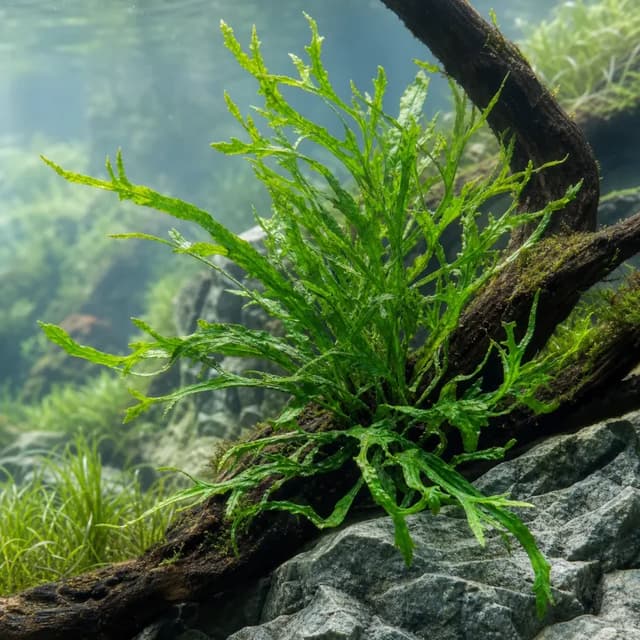
Madagascar lace plant is a cool-water specialist from flowing habitats in the Comoros and Madagascar. Its leaves develop as an open fenestrated mesh, all veins and no tissue between, a natural filigree that no other aquarium plant produces, and it insists on the clean, cool, oxygen-rich conditions of its home rivers.
02
Aquascaping use
Give it a clear stage where light passes through the lattice and reveals the structure; crowding hides its whole reason for existing. It suits cool, high-flow specimen displays over warm community jungles.
03
Planting
Rest the tuber shallowly in clean, nutritious substrate with the growth point exposed. Site it in strong circulation from the start.
Plant the tuber shallowly in clean, nutrient-bearing substrate
04
Light & CO₂
Moderate light with steady CO₂ supports the lace form; cool water and vigorous flow matter as much as either. Sustained warmth is its chief killer.
05
Substrate & fertilization
Feed the roots well while keeping the water column clean and low in organics. It wants nutrition in the substrate, not the water.
Feeding behavior: Root feeder. Nutrient demand: high.
06
Growth, trimming & propagation
Remove decaying leaves promptly, as their debris fouls the delicate lattice. Leave a resting tuber undisturbed to resprout.
Seed is the primary documented method
07
Common problems
- !Warm, stagnant water weakens growth
- !Poor water quality damages the delicate fenestrated leaves
- !A rest period can resemble decline even when the tuber remains viable