01
Overview
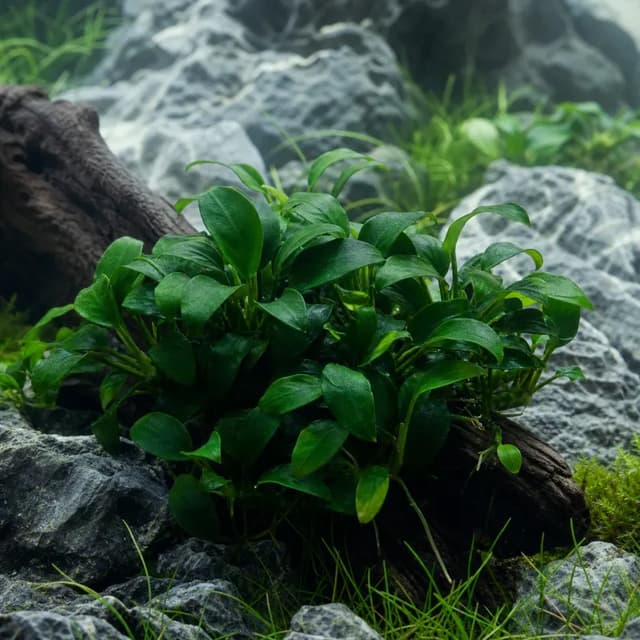
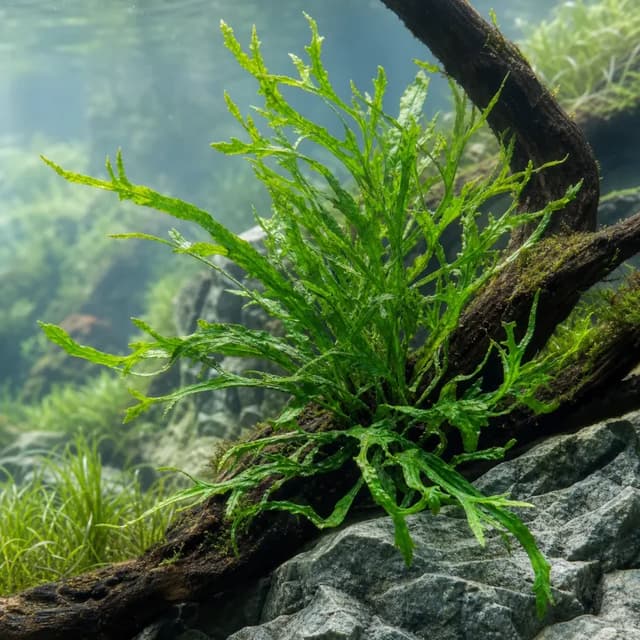
Bucephalandra trade names cover many forms, so leaf size and color vary. Most share a creeping rhizome, firm leaves, and slow underwater growth.
02
Aquascaping use
Repeat small clusters across connected hardscape to create visual continuity. Darker leaves are especially effective beside pale stone or fine grasses.
03
Planting
Keep the rhizome exposed and give new portions gentle flow. Small roots may be tucked into crevices without burying the crown.
Attach to porous rock or driftwood
04
Light & CO₂
Moderate, stable conditions matter more than intensity. CO₂ often improves transition and reduces the stop-start growth seen after planting.
05
Substrate & fertilization
Dose the water column consistently and avoid sudden changes. Trace nutrients can influence coloration, but cultivar identity remains the main factor.
Feeding behavior: Water-column feeder. Nutrient demand: moderate.
06
Growth, trimming & propagation
Remove failing leaves cleanly and leave healthy rhizome intact. Older clumps can be divided when multiple growth points are visible.
Rhizome division
07
Common problems
- !Newly imported plants can shed leaves
- !Rhizome rot follows deep planting
- !Algae can persist on old slow-growing leaves