01
Overview
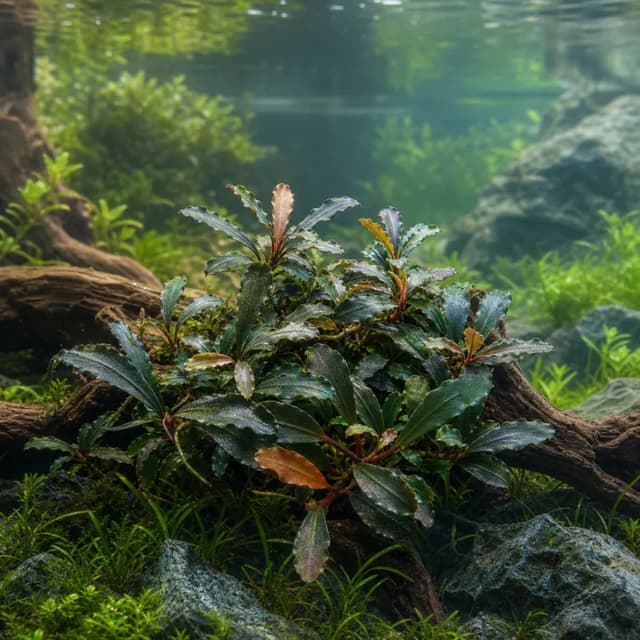
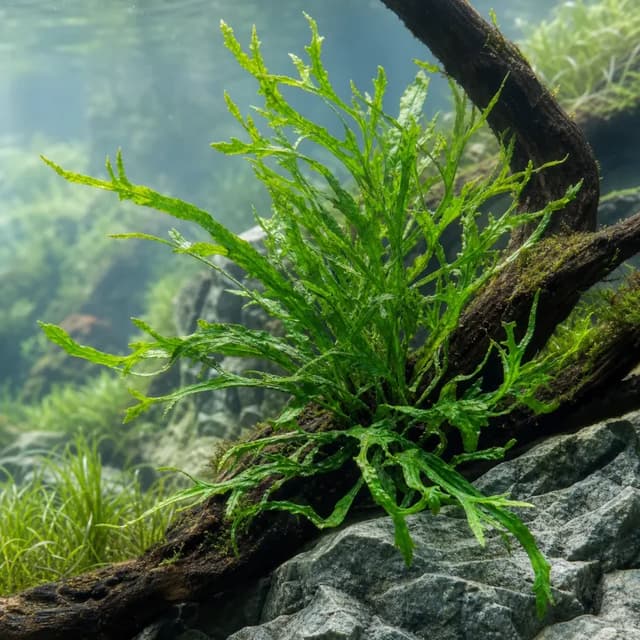
Its compact leaf size and predictable form make this one of the most useful small epiphytes. Growth is deliberately slow, so mature clumps feel established without quickly obscuring hardscape.
02
Aquascaping use
Use small groups at the base of stone, in driftwood joints, or as a transition between moss and larger-leaved plants.
03
Planting
Divide tissue-culture portions gently and secure the rhizome with gel cyanoacrylate, thread, or a narrow crevice. Keep every rhizome exposed.
Attach to rock or wood; never bury the rhizome
04
Light & CO₂
Low to medium light is usually sufficient. Supplemental CO₂ can improve vigor but is not required for reliable growth.
05
Substrate & fertilization
A consistent, modest water-column fertilizer is more useful than rich substrate. Avoid large swings in micronutrient dosing.
Feeding behavior: Water-column feeder. Nutrient demand: low.
06
Growth, trimming & propagation
Remove old leaves at the rhizome. Divide only when each section will retain several healthy leaves and roots.
Rhizome division
07
Common problems
- !Burying the rhizome can cause rot
- !Slow leaves collect algae under excessive light
- !Emersed-grown leaves may adapt gradually